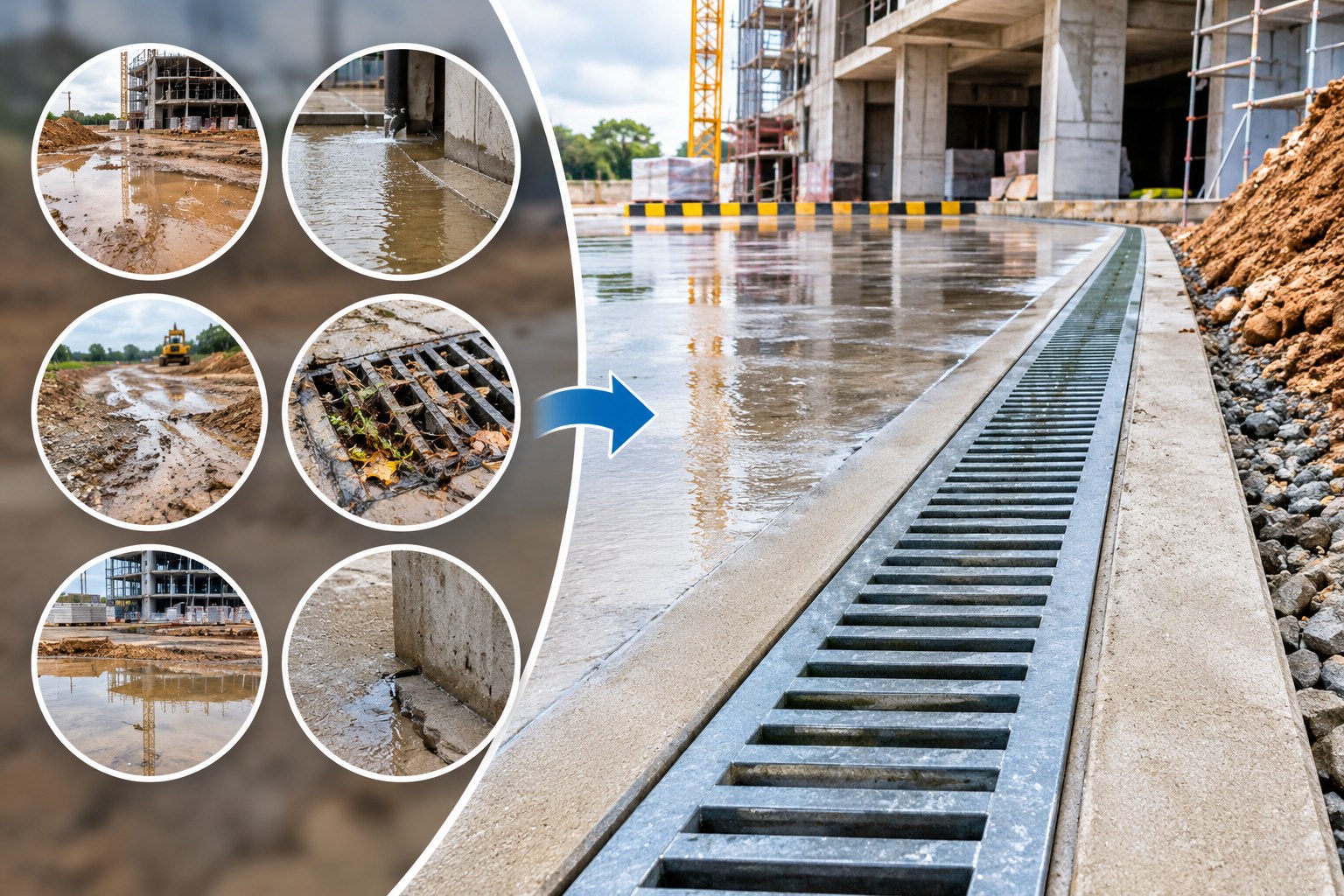
Have you ever wondered why some construction sites struggle with waterlogging even after the work is completed? The answer often lies beneath the surface, where poor drainage planning allows rainwater to collect instead of flowing away efficiently. Over time, this can affect concrete surfaces, weaken soil, and increase maintenance expenses.
In this blog, we explore six important signs that indicate your construction project needs a better surface drainage system. Understanding these warning signs can help you identify drainage problems early, prevent avoidable damage, and make informed decisions when selecting drainage products. Reliable Concrete Saucer Drain Manufacturers in Chennai can also help you find suitable solutions based on your project’s drainage requirements.
“Effective drainage begins with smart planning and ends with lasting protection.”
One of the earliest indicators of poor surface drainage is rainwater that accumulates in open areas, parking lots, and construction areas. If there is no satisfactory way for water to flow, it forms puddles and can affect construction operations and hinder access to outdoor areas. Persistent wetness can also impact the usability of pathways and can make surfaces slippery. The implementation of an appropriate drainage plan to direct excess water to appropriate outlets and to maintain site control during a rain event.
Properly designed and installed, concrete saucer drains may be an effective way to divert surface water from sensitive areas. When choosing a drainage product, take into account the slope of the site, the amount of rain expected and the amount of runoff that is required to be managed.
If water continues to pool around foundations, it can cause major trouble. Excessive moisture can cause soil movement, settlement, or additional pressure on structures below grade depending on soil type, drainage and foundation design. If the cause of this problem is not solved, it can cause problems with the long term stability of a building.
A well-designed surface drainage system prevents water from pooling in foundation areas. There may be some assistance from concrete saucer drains that can act as a conduit to channel the run off down some identified paths. Wherever necessary, surface drainage should complement proper foundation waterproofing and subsurface drainage.
Cracks that form on driveways, walkways, parking areas and other paved surfaces can be a sign of a variety of issues, such as inadequate ground preparation, shrinkage, heavy loads and water damage. If rain water is allowed to enter cracks or pool near concrete surfaces over and over, it can exacerbate existing cracks and gaps. Freeze-thaw cycles may take their toll in colder climates, and erosion under paving in other environments may lead to uneven surfaces.
The surface drainage system provides adequate drainage and helps to keep some areas of concrete dry. The concrete saucer drains can be integrated into the site design to control and direct rainwater before it travels over the paved surface. But any cracks will need to be evaluated in isolation to determine the true cause.
Without a clear runoff path, sediment, debris, leaves or construction waste can inhibit a drainage system’s ability to function properly. Ongoing runoff can result in road and walkway flooding, as well as flooding of building entrances. These obstructions can cause a risk of flood water collecting in certain areas during heavy rain and make it more difficult to move around the property.
Consistent water flow is important, and requires regular inspection and correct drain selection. A concrete saucer drain may be able to give a defined path of surface runoff, but will only work properly when there is proper installation, sufficient capacity and regular maintenance. The flow pattern of the drainage should also take into account the place where collected water will be released.
Soil erosion along the edges of gardens, roads, embankments and landscaped areas can slowly wash away due to unchecked rain water. This erosion can show the roots of plants, cause uneven ground and affect outdoor aesthetic. On construction sites, concentrated runoff can also carry loose soils into the drainage channels which helps to increase the risk of blockages.
A surface drainage system that is well-designed will help manage rainwater flow and movement. The use of concrete saucer drains allows water to be directed down certain drains, minimizing water flow across critical areas of the landscape. Depending on site conditions, additional measures like vegetation, erosion-control mats and appropriate slope protection may be required.
If there is recurrent drainage problems, it might be a sign that the current drainage system does not match the water flow, layout or maintenance needs of the property. Repeated blockage, flooding of the channels, damaged sections of the channels, and frequent waterlogging can lead to labour costs and site utilization issues. Individual replacement of damaged parts without a solution to the problem of drainage may also result in re-purchasing.
A properly planned drainage system from the start will minimise unnecessary maintenance/repair efforts. Durability, size, installation needs, loading and accessibility for cleaning are important factors to consider when comparing products. The Concrete Saucer Drain Manufacturers in Chennai can guide the customers to choose the right product as per their project needs and the final selection will be made as per the engineering requirements of the site.
A reliable drainage system does more than remove excess water. It helps protect paved surfaces, preserve landscaped areas, and reduce recurring maintenance problems. Identifying early warning signs and planning suitable drainage channels can make a significant difference to the long-term condition of your construction project. Choosing products from trusted Concrete Saucer Drain Manufacturers in Chennai can help you explore durable drainage solutions that suit your site requirements. Invest in proper drainage planning today to minimise water-related issues and support safer, better-maintained outdoor spaces.
Concrete saucer drains are used to collect and channel surface water from roads, construction sites, parking areas, and other outdoor spaces to help manage rainwater runoff.
They provide a defined channel for directing excess rainwater towards designated outlets, reducing water accumulation when properly designed and installed.
They can be installed along roadsides, residential layouts, commercial properties, industrial premises, and other suitable outdoor areas based on drainage requirements.
Consider drain dimensions, expected rainfall, surface slope, water flow capacity, installation conditions, durability, and the intended application.
Compare product quality, dimensional specifications, manufacturing consistency, project requirements, and the supplier’s ability to provide suitable drainage products.
As leading Concrete Manhole Cover Manufacturers in Chennai, we manufacture a comprehensive range of high-quality precast concrete products. Our product line includes SFRC / RCC Manhole Cover with Frame, SFRC/RCC Round Manhole Cover, Concrete Drain Slab, Concrete Earth Pit, Plain Cover Slab, Concrete Trench Cover, Trench Cover with Frame, Grass Grid, Grass Paver, Concrete Saucer Drain, Concrete Cover Block, Concrete Marking Stone, Concrete Kerb Stone in Chennai.
Copyright @2026 Sai Mars. All Rights reserved. Design and Developed By